
Following Hamilton County Recent Arrests
Start with an odd fact. Hamilton County has no jail. The Illinois Sheriffs’ Association county directory says it holds no beds either. The official Hamilton County Sheriff’s Office page posts contact details. Nixle and Facebook links appear there too. It carries no custody roster and posts no booking feed. That silence means little. An empty county-site search does not tell you an arrest never happened. It tells you the receiving facility has to be found first.
Illinois law covers counties lacking a sufficient jail. Such a county can commit people to an adjoining county’s facility. A January 2025 WFIW report showed one Hamilton arrestee booked into White County Jail. A second person went home on pretrial conditional release instead. One example is not a rule. White County does not automatically take every Hamilton arrest. The arrest spot, the booking jail, and the Hamilton court can each sit in a different place. So can any later custody transfer.
| Channel | Window | Hamilton result |
|---|---|---|
| County roster | Current custody | No Hamilton jail or official roster found; identify the receiving facility. |
| 24 Hour Arrests | Same day | No official 24- or 48-hour feed found; use the Sheriff and receiving jail. |
| Arrest Log | Multiple days | No official rolling blotter; local news is selective. |
| VINELink Check | Custody/court events | Statewide service; Hamilton local-jail participation is not confirmed. |
| Judici | Post-booking case | Court information, not live custody. |
Which Jail Received the Arrest?
Ask the right question first. The question is which jail accepted the person. Call the Sheriff at 618-643-2511 during its posted weekday hours, Monday through Friday, 8:00 a.m. to 4:00 p.m. Ask whether the person is held, released, transferred, or was never committed, and request the receiving facility and booking number if one exists. For an arrest in McLeansboro, municipal police may hold the incident report while a different jail holds the booking and photo records.
- Confirm the arresting agency and approximate time and place.
- Ask the Sheriff or agency to identify the receiving jail.
- Use only that facility’s official custody page or records office.
- Search Illinois VINE, understanding participation and timing can vary.
- Check Judici or the Circuit Clerk after court filing begins.
- Submit a focused request if live channels do not answer the question.
The statewide sheriff directory’s Hamilton entry confirms the no-jail designation on its own. That official status is why the receiving facility, not Hamilton County, controls custody details and photo access.
Hamilton Arrest Roster Limits
Hamilton publishes no roster URL, search form, mugshot policy, or posting schedule. Its refresh cadence and roll-off period are likewise undocumented. Those facts cannot be borrowed from White County, a vendor, or an aggregator. Once an agency names the receiving jail, a clear rule follows. Judge that jail’s system on its own terms.
| Detail to verify | Why it matters |
|---|---|
| Name, birthdate, or booking-number search | Fields differ and spelling can hide a valid result. |
| Booking date and agency | These separate arrest from intake. |
| Charges and bond | They describe charges and initial terms, not guilt. |
| Facility and status | Transfer or release can remove a result. |
| Photo availability | The receiving custodian controls what exists and is disclosable. |
| Update and retention rules | No Hamilton cadence is verified. |
The official Sheriff page is the routing source shown here.
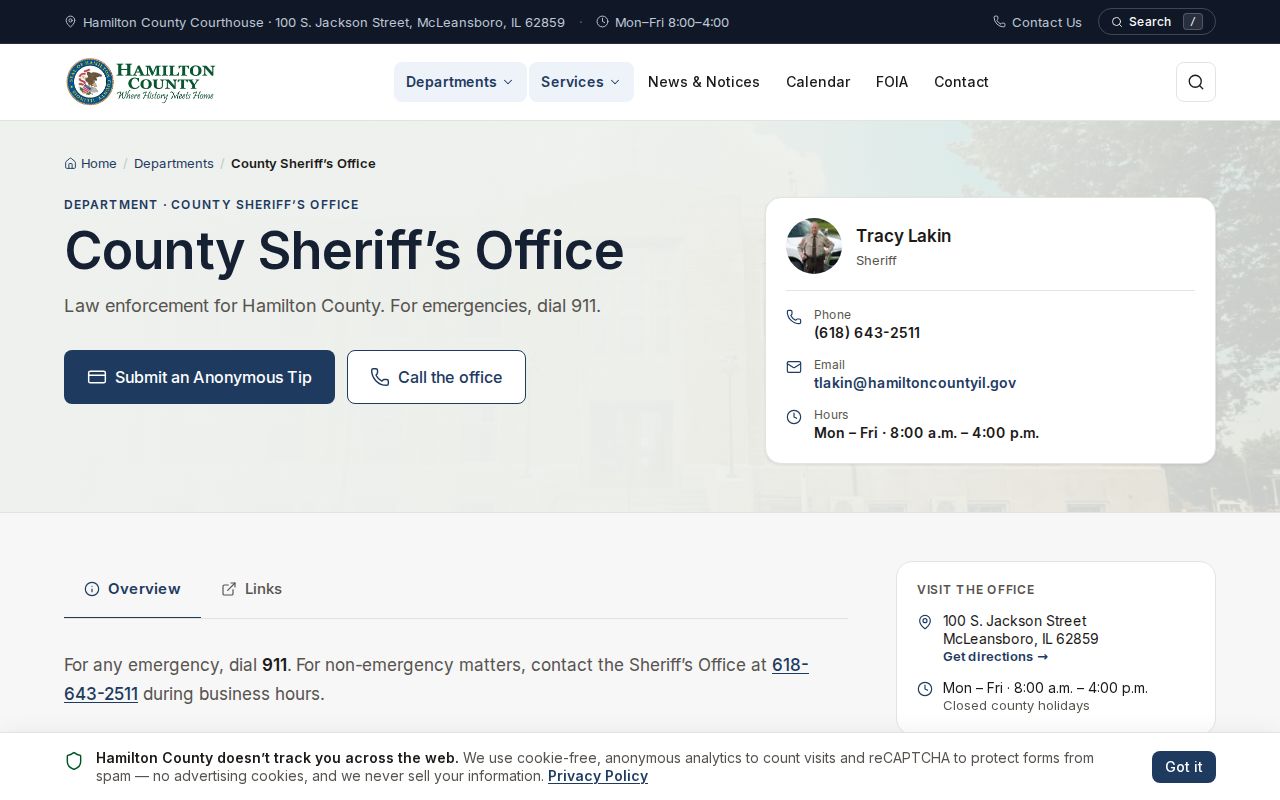
Nixle and Facebook serve as alert and community-update channels for the Sheriff. They are not confirmed booking-photo streams. The department offers no jail app.
Where Hamilton Arrests Are Published
Official sources come first in any lookup. Secondary pages can point you toward leads. They may also be stale, incomplete, or tied to the wrong Hamilton County. A missing news story or empty aggregator result never proves an arrest did not occur.
| Source | Photo? | Use |
|---|---|---|
| Sheriff / arresting agency | Ask if available | Official report owner and receiving-jail route. |
| Receiving jail | Facility-specific | Official intake, custody, transfer, release, and created photo. |
| Circuit Clerk / Judici | Usually no | Official hearings and dispositions. |
| IDOC | State profiles may | Sentenced state custody, not new bookings. |
| WFIW | Story-specific | Local event reporting, not a complete log. |
| Mugshots.com | Older photos may appear | Unofficial historical-looking Hamilton, Illinois page. |
| Arrestlogs.org | Unverified | Unofficial; reported no 2026 uploads during research. |
WFIW Radio provides a searchable entry point for Hamilton arrest and warrant stories.
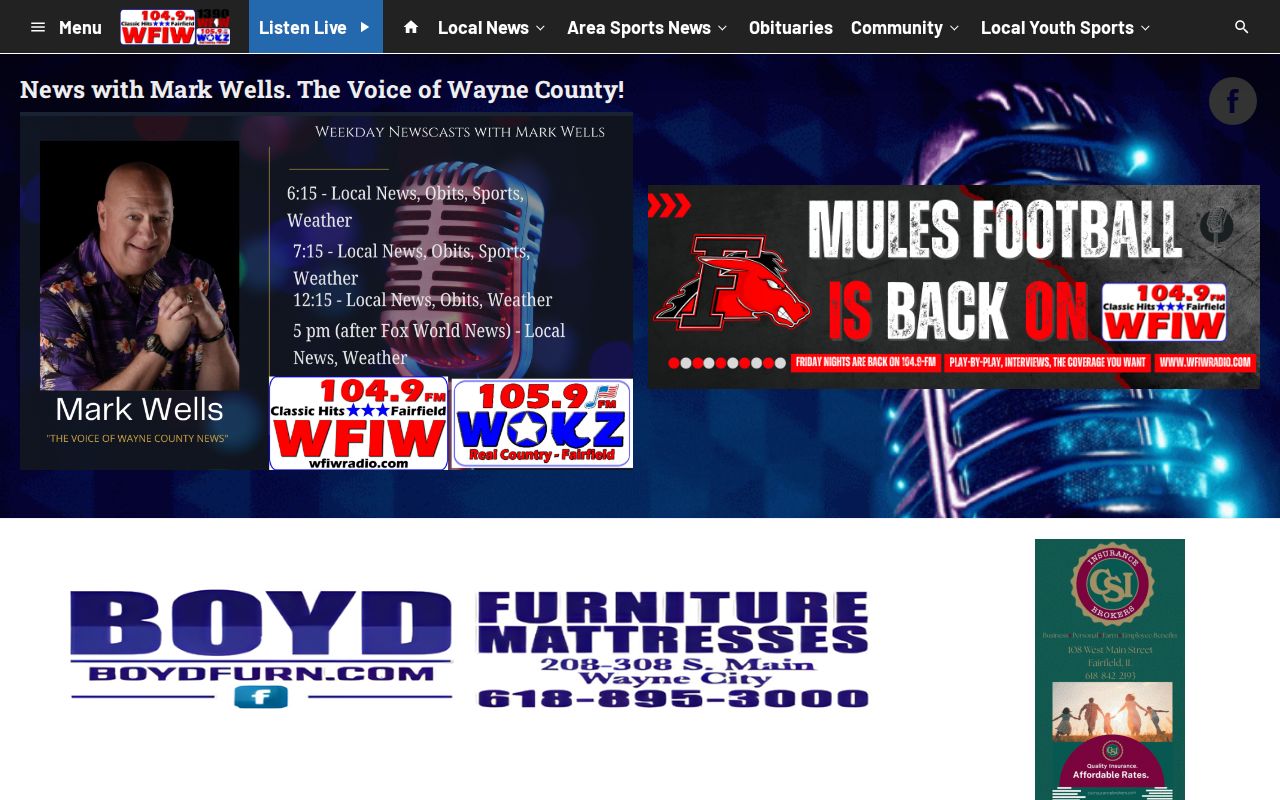
Local news covers events as they happen, which makes it a lead rather than a census. The McLeansboro Times-Leader runs weekly and keeps historical archives in libraries. It publishes no current online blotter.
Jurisdiction check: “Hamilton County mugshots” searches drift toward Indiana. Busted Newspaper and Mugshots.zone results point to Indiana pages, while RecentlyBooked and Arrests.org carry no Hamilton County, Illinois section. Always confirm the state, agency, facility, and date.
Recent Arrests by Hamilton City
McLeansboro Recent Arrests covers the county seat and its long-standing municipal police department. No city log exists. Police and the Sheriff both route inquiries to the receiving jail.
Dahlgren Recent Arrests walks the village path. No independent police roster or blotter exists there.
Broughton Recent Arrests follows the arresting-agency, Sheriff, and receiving-jail chain. The village posts no feed. A town’s name alone never tells you who arrested or booked someone.
Inside a Hamilton Arrest Record
Each arrest creates records in separate hands. The arresting agency owns its incident report. The receiving jail owns intake, custody, release, transfer, and photo records it creates. The Circuit Clerk owns the filed case, and IDOC keeps a state profile if a sentence later brings admission. These pieces describe distinct stages, not one file.
| Field | Meaning |
|---|---|
| Identity | Name, age, address, and available identifying information. |
| Arrest details | Time, place, and agency. |
| Charges | Charges recorded initially; they may change. |
| Bond | Initial release or detention terms. |
| Custody events | Received, discharged, and transferred times. |
| Photograph | “When and if available,” not a guaranteed web field. |
| Facility additions | Booking number, classification, release reason, court date, or housing details. |
A Hamilton arrest record marks a procedural step, not the end of the story. The case file held by the Circuit Clerk shows what happened after the arrest.
Hamilton County Mugshots and Photos
Hamilton County publishes no official photo roster. It also posts no mugshot policy. Illinois arrest-record law speaks of a photograph “when and if available.” That phrase works within legal limits. An arrest can happen with no web photo ever appearing. The agency you contact may not have created the image. Ask the receiving jail whether one exists. Ask whether it can be released. The IDOC search form takes a last name, IDOC number, or birthdate.
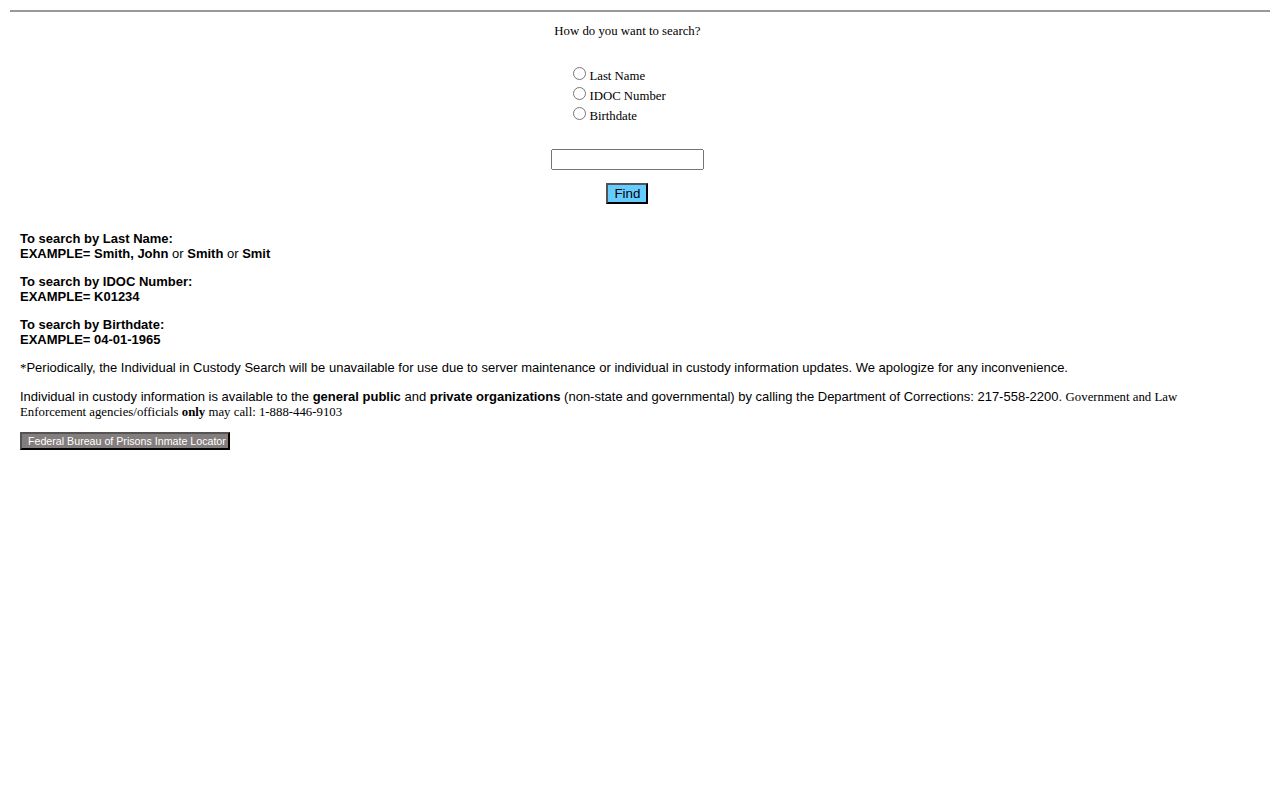
An IDOC profile can carry photographs along with institution, status, dates, and sentence details. That picture comes from prison intake, though. It is not a Hamilton booking photo, and IDOC has nothing on someone newly held in an adjoining-county jail. Mugshots.com posts an unofficial county page of its own. The site states a free policy for qualifying expunged records there. Treat that as a private company's policy rather than any government promise.
Request a Hamilton Arrest Record
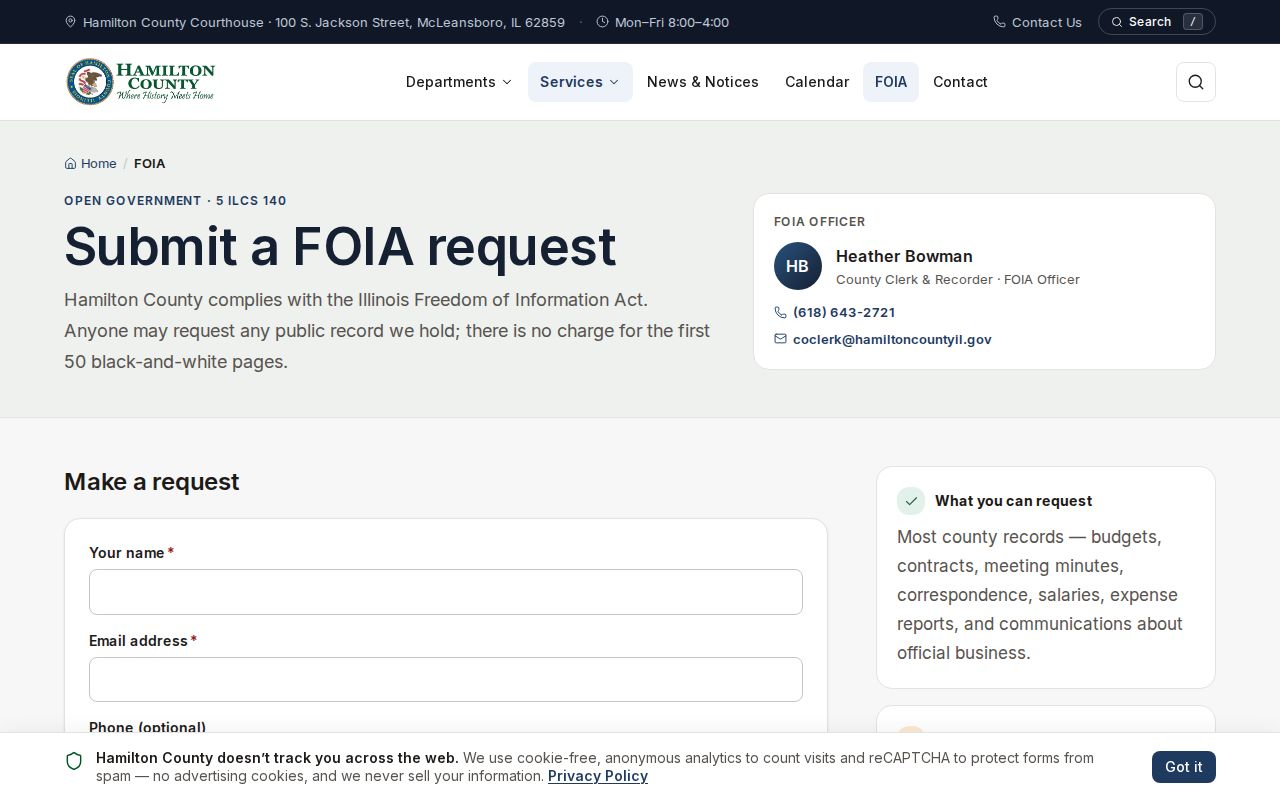
Records requests start with the official Hamilton County FOIA page. It names Officer Heather Bowman, County Clerk & Recorder, at 618-643-2721 and coclerk@hamiltoncountyil.gov. Send Sheriff records to the Sheriff or its custodian, and ask the officer to route a request when ownership is unclear.
- Give the name and a useful non-sensitive identifier.
- State the approximate date, time, place, and agency.
- Request report, charges, intake date, receiving facility, bond, and custody-event times.
- Request any photo separately, “when and if available,” in electronic format.
- Ask Hamilton to identify the receiving facility.
- For withheld material, request the statutory basis and redacted releasable portions.
Hamilton County allows five business days for routine record requests. A written extension can add five more. Commercial requests get 21 business days. Your first 50 black-and-white pages cost nothing. Digital photos, color copies, audio, and video carry fees the county does not publish on one flat list. Ask for electronic delivery and a written estimate up front. The county's FOIA request page walks you through the process.
A proper denial names the exemption claimed. From there, review runs through the Attorney General's Public Access Counselor or the circuit court, though neither path promises every field or photo in an arrest record.
Illinois Arrest Records and Photo Law
Two statutes anchor news-media access in Illinois. 5 ILCS 160/4a and 50 ILCS 205/3b cover identifying information, charges, arrest time and place, and the arresting agency. They also cover bond, custody events, and a booking photo when one exists. The 72-hour guideline pushes release of these details. It does not require a permanent public webpage. Under 5 ILCS 140/7, agencies may withhold or redact material to protect pending proceedings, fair-trial rights, safety, confidential sources, and investigative methods. Juvenile records and a minor's identity get separate protection through 705 ILCS 405/1-7. Section 4a also restricts police posting booking photos on social networks for certain lower-level offenses. Wanted, fugitive, person-of-interest, and missing-person posts stay allowed. That is why Nixle and Facebook never amount to a complete arrest roster.
A few terms come up constantly. Booking is the intake step right after an arrest, bond sets the terms of release, and disposition is how the court resolves the case. Expungement and sealing are formal legal processes, not the ordinary roll-off of a jail roster.
Correcting or Sealing Arrest Information
Start with whoever holds the record: the Sheriff, McLeansboro Police, the receiving jail, IDOC, or the court. Send the identifier and any supporting papers. Hamilton County publishes no general booking-photo takedown policy. Lawful records are not deleted just because someone asks. For expungement and sealing, 20 ILCS 2630/5.2 controls. It includes no-wait categories such as acquittal, dismissal, release without charging, and reversal or vacation, depending on the case. File through the Illinois Courts forms and the Hamilton Circuit Clerk. OSAD can screen eligibility at 866-787-1776 or expungement@osad.state.il.us. Under 815 ILCS 505/2QQQ, charging money to remove or alter covered criminal-record information is regulated. Exceptions exist. Never pay an intermediary who promises deletion. Save the page and the demand. Use the free correction and expungement routes, and talk to a lawyer. A search engine's outdated-content tool can clear a stale snippet. It cannot change the original record.
Hamilton Arrest Warrants and Wanted Notices
Hamilton County posts no online warrant portal and no recurring most-wanted list. Judici is a court docket, not a live warrant database. For a real check, call the Sheriff at 618-643-2511 or the Circuit Clerk at 618-643-3224. Anyone who suspects a warrant in their name should get safe instructions from an attorney or the court. News reports show how warrants cross lines. WFIW covered Carmi police arresting a person on Hamilton, White, and Wayne warrants. A Hamilton fugitive was also picked up in Indiana before extradition. The issuing court, the arresting agency, and the holding facility can all differ. Never approach a wanted person. Call 911 for immediate danger, and use official tip channels otherwise.
After a Hamilton County Arrest
Court records for Hamilton County live with the Circuit Clerk, Beth Sandusky, at 100 S. Jackson Street in McLeansboro, 618-643-3224, serving the Second Judicial Circuit. Judici can show litigants, charges, hearings, minutes, documents, fines, dispositions, and sentences. The path after an arrest may run through intake, bond or release, first appearance, and charging. Later come hearings, and finally a sentence or dismissal. A jail roster answers one question only: who is in custody. Court files carry on long after a booking entry drops off. A new arrest may lag for several reasons. Filing has not happened, confidentiality applies, or another jurisdiction owns the case. The Circuit Clerk page is the local route in.
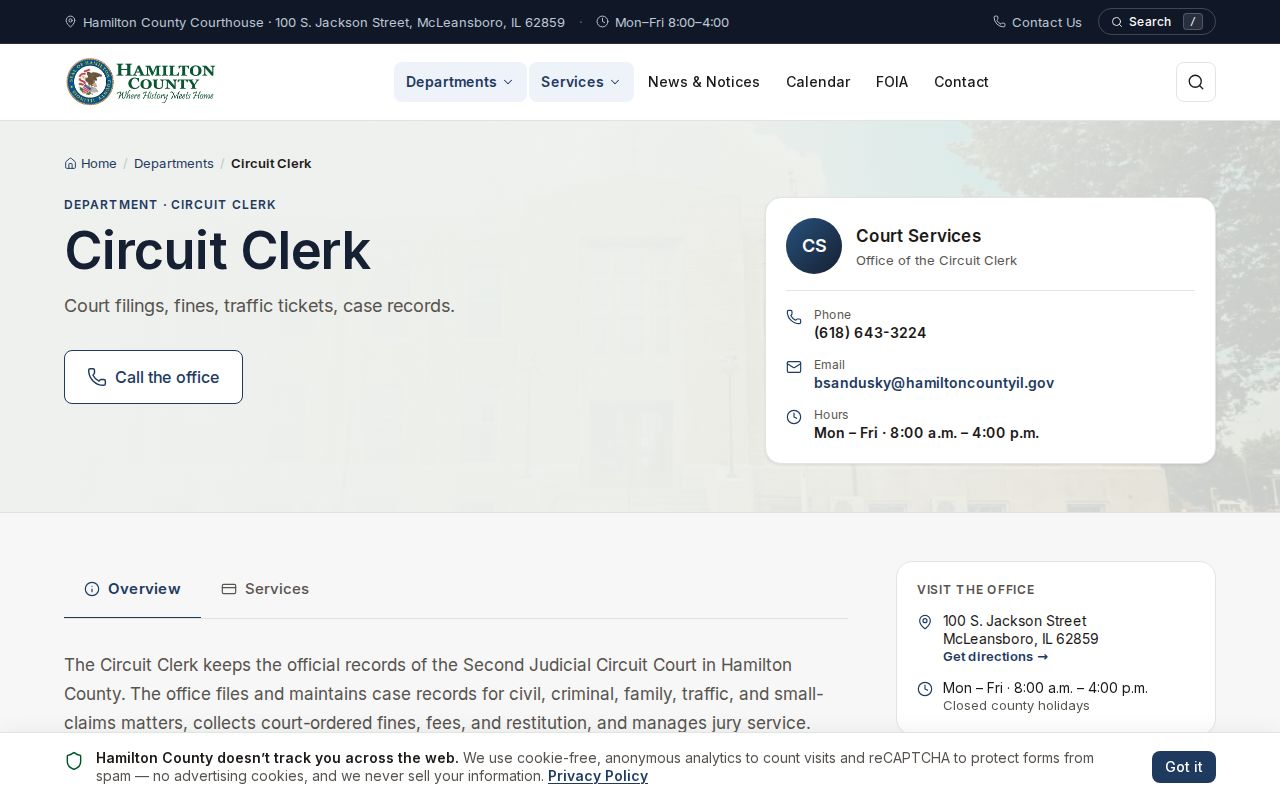
Read the disposition to see how the case ended. Release and custody are separate from the court's outcome, so check the record itself.
| Status | Best source |
|---|---|
| Just arrested | Arresting agency and confirmed receiving jail. |
| Held | Receiving facility and VINE if participating. |
| Released | Report request and court docket. |
| State sentence | IDOC search. |
| Federal custody | BOP and federal court. |
| Immigration detention | ICE locator and DHS ICE VINE. |
State, Federal, and ICE Custody
A Hamilton arrest can lead somewhere other than the county jail. State prison time falls under the IDOC Individual in Custody Search. That tool tracks prison and parole, not fresh Hamilton County bookings. It won't show county booking photos either. Completed sentences may require IDOC's Record Search for archived cases.
Federal custody works differently. The BOP locator finds people in federal prison. Pretrial defendants often sit in another facility tied to the federal docket. Immigration detention is its own system. Check the ICE locator or DHS ICE VINE for those cases. Hamilton County lists no ICE contract and no federal data feed.
Where Older Arrest Records Go
Hamilton County publishes no retention period for arrest reports. The same goes for booking photos, jail registers, and social posts. A page vanishing does not mean destruction. Retention does not promise permanent public access, either. Ask which Local Records Commission schedule and disposal authority governs a given record. Current or certified court files start with the Circuit Clerk. Older records transferred for safekeeping may sit at the Illinois Regional Archives Depository at Southern Illinois University. Hamilton's IRAD listing shows no modern Sheriff booking-photo series, though. McLeansboro Times-Leader holdings at McCoy Memorial Library are newspaper reports, not booking files or dispositions. Can a released person vanish from custody search yet still have a record? Yes. Release ends a roster result, but the arrest report and case remain. Expungement and sealing take a court order, not a roster roll-off.
Verify an Arrest Across Systems
Checking a Hamilton County arrest across systems works best as a comparison job. Write down the exact name spelling. Add the arrest date and the arresting agency. Note which jail received the person and when each source was last updated. Comparing those details beats trusting whichever page looks freshest. A receiving jail can confirm who is in custody today. Yet it may say nothing about how the court case ends. Judici may show a Hamilton case moving forward while the person sits somewhere else entirely. A WFIW article captures what officials said on the day it ran. The paper does not keep it current like an official record would.
Timing solves most apparent conflicts. Intake often lags the roadside arrest. A first appearance can free a person on conditions before anyone checks a roster. A transfer may rebook someone under a different facility's name. Later charging decisions can change what booking recorded. Always seek the latest status from whichever office runs that stage of the case.
Illinois VINE adds a notification layer for participating custody and court events. Alerts can cover release, transfer, escape, and court dates. The service is free and confidential. It is not an emergency line, though. It is also no substitute for calling the receiving jail. Hamilton-local jail participation is not confirmed. Anyone depending on alerts for safety needs a backup plan. Such a person should call 911 in immediate danger.
Photos deserve the same scrutiny. A news image could come from the agency, from a file archive, or from somewhere else entirely. An IDOC photo reflects state custody, nothing more. Unofficial sites sometimes keep an old booking photo long after release. Ask who published the image, when it was made, and whether the case has since changed.